Top Tea-Producing Countries: Production & Varieties


China and India have been globally dominating the global tea production since ages. This is mainly possible because of its cultural significance with, the domestic demand of the country, and their favourable geographical conditions. The tea industry is booming worldwide, thereby impacting several other economies. The demand for tea is raising as its awareness has grown over the years regarding its health benefits. Also, a variety of herbal and specialty teas has boosted interest in tea. Go through this blog to learn about countries offering the best tea in the world.
Table of Contents
Introduction to the Global Tea Industry
Tea is more than just a beverage. It is deeply rooted in many cultures and now it is fueling global economic growth. Over the centuries, tea traveled from China to various other distant nations. Tea is marked as an important global cash crop. The industry’s rapid growth is for several reasons, mainly for the increased awareness of health benefits and the rise of specialty teas. In 2026, global tea consumption reached around 7.6-7.8 billion kg. The annual world tea production exceeded USD 59.8 billion in FY 2025-26.
Who are the Top Tea-Producing Countries?
Some countries have established themselves as leading producers of premium tea leaves and distinctive blends. According to the Tea Board of India (2026), here are the top tea-producing nations, each with a rich cultural heritage steeped in tea.
China
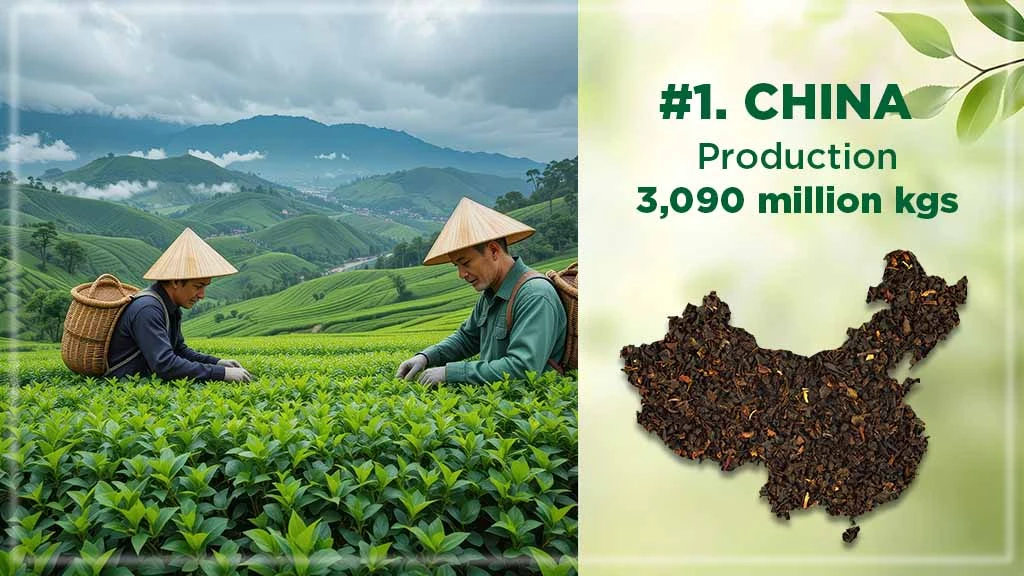
China is known as the world's largest tea producing country. By 2025, tea output reached 3,740 million kg (M. Kg), making up 53% of global production. According to legend, Emperor Shen Nong invented tea in 2737 B.C. when camellia leaves fell into his boiling pot. Tea culture in China is considered rich and complex. It is deeply ingrained in ceremonies and social gatherings.
Main Highlights:
- The top tea-producing regions in China are Guizhou, Sichuan, Yunnan, and Fujian.
- Encouragement of tea fields rural development and strengthen the economy
- There are 6 main types of Chinese tea are Oolong, Red, Yellow, White, Green, and Dark.
India
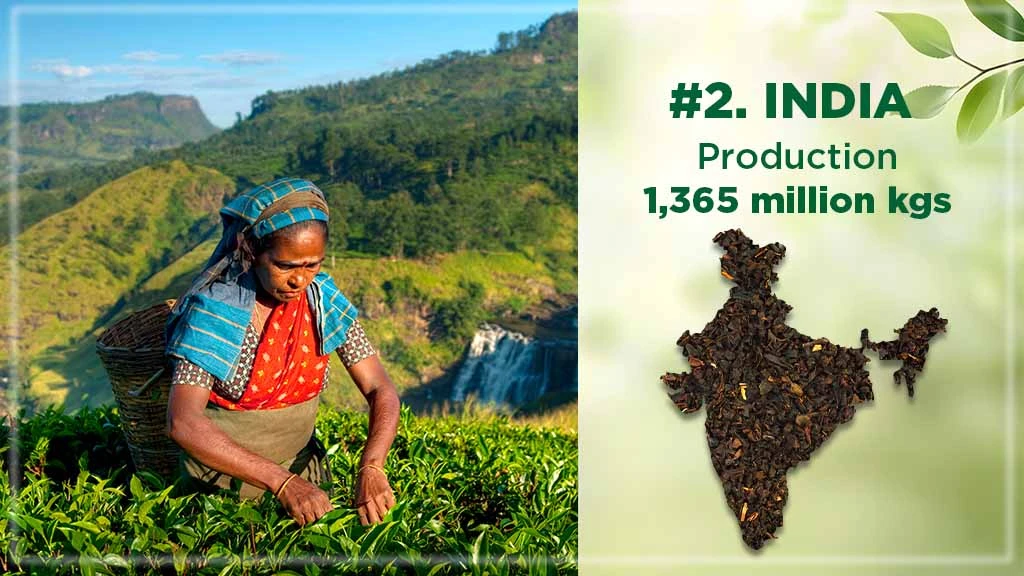
India is the second-largest tea-producing country. One of the finest quality teas produced with the advantage of optimal weather & soil conditions, strategic market expansion, continuous innovation, and heavy investment in tea processing units. The tea plantation is marked as a cultural heritage in India. The initial total tea production of around 1365 million kg, in FY2024, it increased to 1,382.03 million kgs. By 2025-06, around 6.35 lakh hectares of land have been decided to alocate under tea cultivation. Not only this, but India is also among the top consumers of tea, with the domestic population consuming 80% of the tea produced.
Main Highlights:
- In 2025, the domestic tea consumption in India reached about 1,200 million kg. This makes India the world's largest consumer of black tea.
- The major tea producing states are Assam, West Bengal, Karnataka, Kerala, and Tamil Nadu. The popular teas worldwide are from Assam, Darjeeling, and Nilgiri.
- India is a large producer of black tea. The total tea exports during FY25 raised to 924 million USD, compared to 826 million USD in FY24, to more than 25 countries worldwide.
Kenya
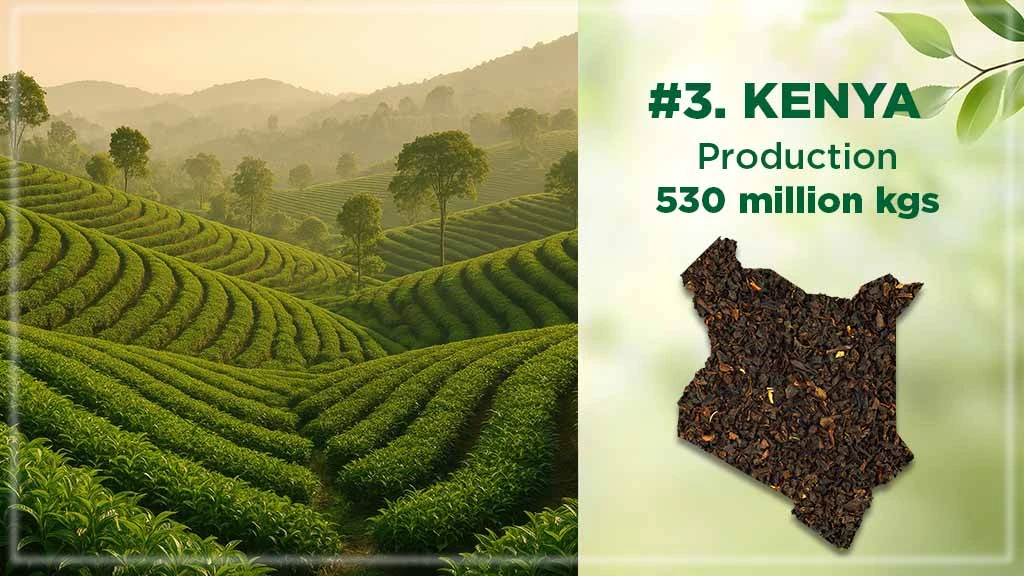
Kenya comes as the third-largest producer of tea in the world, producing a total of 530 million kgs of tea. This industry has a big contribution to the Kenyan economy, as it is one of the world’s leading foreign-exchange earners. CTC black tea from Kenya is a renowned product worldwide. In 1950, the Tea Board of Kenya was established to regulate the industry under the Ministry of Agriculture and Livestock Development. In addition to its economic importance, tea in Kenya has social and cultural importance.
Main highlights:
- Tea is mainly grown in the West and East of the Rift block of Kenya.
- Popular tea types in Kenya are purple, green, white oolong, and yellow tea.
Turkey
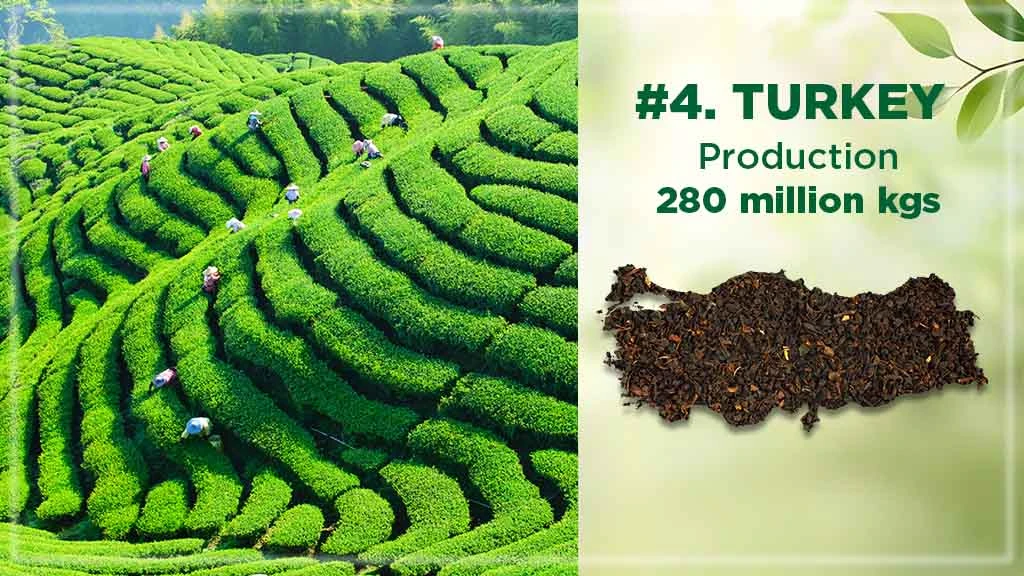
Tea brings people together and is a symbol of hospitality among the Turkish population. Rize is the major tea-producing city in the country due to its fertile soil, humidity, and temperate climate. The Turkish tea is usually served in tulip-shaped glasses and has a smooth and slightly bitter flavour. Tea is a huge part of Turkey’s agricultural economy; it brings people together and is a symbol of hospitality among the Turkish population.
Main Highlights:
- Turkey stands fourth on the list with a total tea production of 280 million kgs.
- The popular tea varieties include black, herbal, and fruit-flavoured teas.
- Turkish black tea, or Çay, is considered the national beverage of Turkey.
Sri Lanka
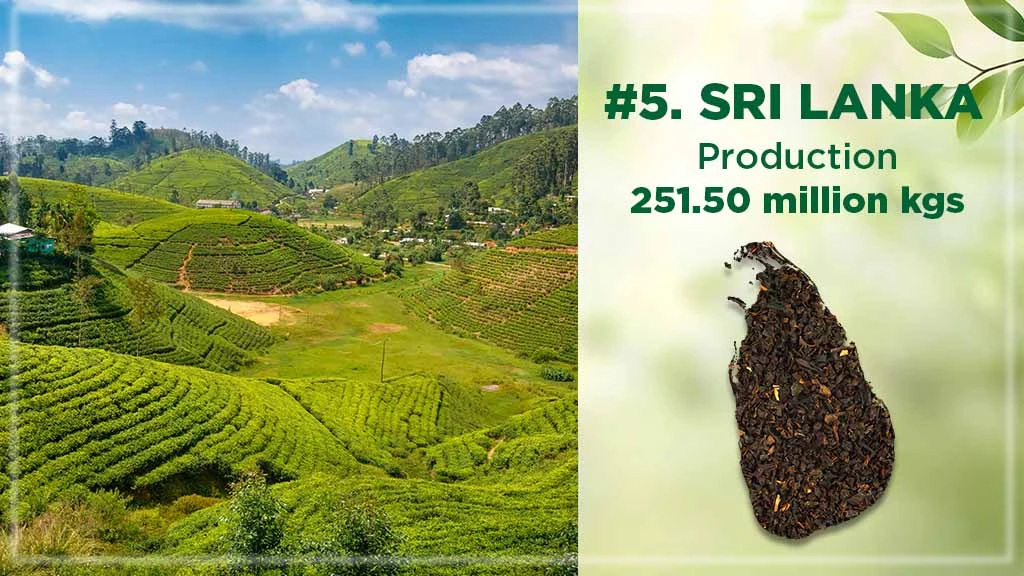
Sri Lanka is the fifth tea-producing country, with 251.50 million kgs of tea yearly. Since 1880, Ceylon Tea has grown using traditional methods. The Sri Lankan Tea Board regulates and monitors quality standards. It certifies ‘Ceylon Tea’ with the Lion logo. Tea cultivation provides employment for most people as it is important for the economy. The central massif and southern foothills are key tea-growing regions. Adequate rainfall and high elevations make conditions ideal for tea. The country produces various teas, like Cut Tear & Curl, Green, Instant, and Bio tea.
Conclusion
Today, the global tea industry is a $59.8 billion market, headed by the largest tea-producing countries, like China and India. While these two nations trade, countries like Kenya, Turkey, and Sri Lanka play an important role by offering some unique flavors of CTC and Ceylon tea to the world.
Tea is considered a great choice for those who are little health-conscious, the industry continues to grow by supporting millions of livelihoods worldwide. From traditional ceremonies to modern specialty blends, tea remains a loved beverage that connects cultures and drives global economies.
Frequently Asked Questions On Top Tea-Producing Countries: Production & Varieties
1. What are the top 5 tea-producing countries in the world?
China, India, Kenya, Turkey, and Sri Lanka are the top 5 tea-producing countries in the world.
2. What is the rank of India in tea?
India ranks 2nd among the world's tea producers.
3. Which country is the world’s largest exporter of tea?
China is known as the world's largest producer and exporter of tea.
4. Which tea is most exported from India?
Black tea is exported out of India in the majority, which is nearly 96% of the total exports.




Related Blogs