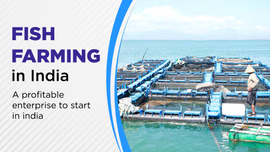
Aquaculture Farming in India: Meaning, Importance and Methods


India is the world’s second-largest fish producer, accounting for 9.64% of global aquaculture production. Aquaculture plays an important role in India’s food industry by breeding, feeding, and protecting fish and other organisms in ponds, tanks, and coastal waters. In this blog, we’ll discuss aquaculture, the main methods used in aquaculture, and the government programs that support its growth.
Table of Contents:
- What is Aquaculture?
- What is the status of aquaculture in India?
- What are the different methods used in Aquaculture?
- What is the Importance of Aquaculture in India?
- What is the advancement of technologies in Aquaculture?
- What are the Government Schemes to Boost Aquaculture in India?
- A Way Forward to India’s Aquaculture Development
What is Aquaculture?
Cultivation of aquatic organisms, such as fish, shellfish, and algae in controlled environments is called aquaculture. It includes breeding, feeding, and harvesting. Aquaculture helps produce food, restore habitats, or provide income. Since the launch of the Blue Revolution Scheme, aquaculture and fisheries production have grown rapidly in many areas.
What is the Status of Aquaculture in India?
India ranks second in the world for fish production. Indian waters contribute about 9.64% of global fish production. In 2024, the seafood exports valued at Rs. 62,408 crores.
From 2004 to 2024, fisheries and aquaculture have grown rapidly. To support this growth, the Union Budget allocated Rs. 2,703.67 crores in the year 2024-25 for the fisheries sector.
This also helped in protecting the marine water near Lakshadweep and the Andaman and Nicobar Islands.
Shrimp farming in India covers 0.16 million hectares. West Bengal and Andhra Pradesh together produce 80% of the country’s shrimp harvest.
What are the different methods used in Aquaculture?
Aquaculture uses various methods in fishery management. Some of them are as follows:
Freshwater Aquaculture:
Freshwater aquaculture involves raising ornamental fish, cultivating freshwater pearls, and breeding species such as magur, rohu, and carp. This type of aquaculture utilizes water with no salt.
70% of India’s fish comes from inland waters, and 65 per cent of that is from fish farming. About 1,300 carp hatcheries supply fish and eggs to farmers. The major carp is freshwater fish. Other types include:
- Exotic carps
- Minor carps
- Catfish
- Trout
The Indian inland fisheries can be categorized as:
- Culture Fisheries (Aquaculture)
- Sport Fisheries
- Ornamental Fisheries
- Coldwater Fisheries
- Floodplain and Wetland Fisheries
- Estuarine Fisheries: Estuaries & Backwaters
- Riverine Fisheries: Rivers & Streams
- Lacustrine Fisheries: Lakes & Reservoirs
Brackish water Aquaculture:
In India, brackish-water aquaculture includes species like mud crabs, tiger shrimp, and grey mullet. It is common in states such as Goa, Kerala, Andhra Pradesh, and West Benga. India has 1.2 million hectares of resources, including mangroves, mudflats, and tidal creeks.
Mariculture
Mariculture is the farming of marine life for food in ponds, tanks, or the sea. India’s long coastline, covering 9 maritime states and 4 union territories, gives it a strong advantage in using ocean resources.
India’s Exclusive Economic Zone covers 2.02 million km2, with the Continental Shelf covering 0.53 million km2. Together, these areas could produce almost 3.93 million tonnes of fish each year, making marine fisheries a key part of India’s sector.
Cage Farming:
Cage farming, or cage aquaculture, is a method of raising fish and other aquatic animals in cages or nets placed in lakes, rivers, reservoirs, or the sea. The cages are made of mesh, which allows water to flow through them for natural filtration and oxygen. This method lets farmers raise many fish in a small space, helping to lower the cost.
The marine fisheries are categorized as:
|
Bottom-water Fish (Demersal) |
Eels, Flatfish, Pomfrets, Catfish, Perches |
|
Mid-water Fish (Pelagic) |
Horse Mackerel, Silver Bellies, Cobia, Bombay Duck |
|
Surface-water Fish (Pelagic) |
Tuna, Seer fish, Mackerel, Ribbonfish, Anchovies, Sardines |
What is the Importance of Aquaculture in India?
Aquaculture is important because it supports livelihoods and helps create job opportunities for people. However, there are some issues that are listed below:
Meeting food demands
Rising populations have increased demand for protein-rich foods. Aquaculture helps meet this demand, especially when wild fisheries face supply limitations.
Conservation of Threatened Species
The act of excessive fishing is a major issue in India. If too many fish are taken out of the ocean, it can create an imbalance in the food chain and ecosystem. A study found 8.2% of 135 fish stocks, like sharks, groupers, and croakers, were overfished. Aquaculture can help in preventing that.
Economic Growth
Aquaculture is growing rapidly. The Global Aquaculture Market Report estimated four years back that the market could grow by 7.7% annually and reach 50.38 billion USD by the end of this year. This growth helps create employment opportunities and earn a living. Even 2.8 crore people are living from aquaculture.
In short, Aquaculture helps the economy by increasing trade and supporting growth in local and regional communities.
Resource Efficiency
Traditional fishing can harm habitats and catch unwanted species. Aquaculture supports environmental management by effectively managing water resources and handling waste.
What are the high-tech advancements used in the Aquaculture Industry?
Recently, the aquaculture industry has begun using new technologies such as aquaponics and hydroponics.
Hydroponics is a way to grow plants indoors without soil. The roots get food from water, which helps the plants absorb nutrients well, helping them grow faster and healthier.
Hydroponics offers an efficient way to farm compared to traditional methods. It also helps make agriculture more sustainable by avoiding the use of chemicals to control pests or diseases.
Many people believe aquaponics could shape the future of food production. It uses water efficiently to grow multiple crops at once and to share nutrients between fish and plants. This method helps protect the environment and is often used in places with limited resources.
Both of these advancements help make agriculture more sustainable and support business growth.
What are the Government Schemes to Boost Aquaculture in India?
India has many resources for developing fisheries and aquaculture. The government has launched several initiatives to promote fish farming, including:
Centrally Sponsored Scheme
In the 10th Plan, the government started a Centrally Sponsored Scheme for the 'Development of Inland Fisheries and Aquaculture.’ This scheme includes the following parts:
- Integrated Development of Inland Capture
- Productive Utilization of Inland Saline or Alkaline Soils for Aquaculture
- Development of Waterlogged Areas
- Coldwater Fisheries and Aquaculture
- Development of Brackishwater Aquaculture
- Development of Freshwater Aquaculture
Fish Farmers Development Associations (FFDAs) in all states are responsible for carrying out the last two parts of the scheme.
The Indian Government has increased the Kisan Credit Card (KCC) lending limit from Rs. 3,00,000 to Rs. 5,00,000 to enhance access to credit for fishers, farmers, etc.
Pradhan Mantri Matsya Sampada Yojana (PMMSY)
The Pradhan Mantri Matsya Sampada Yojana (PMMSY) supports responsible and sustainable growth in India's fisheries sector. The government has set aside Rs. 20,050 crores for this scheme.
In addition, the Department of Fisheries has also approved a Sub-scheme named Pradhan Mantri Matsya Kisan Samridhi Sah-Yojana (PM-MKSSY) from 2023-24 to 2026-27. The scheme, inter alia, aims to incentivize aquaculture through performance grants, which increases the value of efficiency of the fisheries sector.
Fisheries and Aquaculture Infrastructure Development Fund (FIDF)
The Fisheries and Aquaculture Infrastructure Development Fund (FIDF) was set up in 2018-19 with a budget of Rs. 7,522.48 crore. To date, a total of 4,94,405 KCCs have been sanctioned to fish farmers, with a disbursed amount of Rs. 3692.73 crore.
This fund builds infrastructure for both inland and marine fisheries. The main organizations that provide loans are:
- National Cooperatives Development Corporation
- National Bank for Agriculture and Rural Development
- All scheduled Banks
With FIDF, eligible projects can receive loans up to 80% of their total cost. There is also an interest subsidy of up to 3% per year for building infrastructure. The scheme runs for five years, from 2018 to 2023.
A Way Forward to India’s Aquaculture Development
India’s aquaculture industry has grown quickly in recent years. Shrimp is now a popular delicacy nationwide. India’s long coastline, favorable climate, and rich water resources make it a prime location for shrimp farming and seafood production.
The shrimp farming and aquaculture industry supports livelihood and creates more employment opportunities. With adoption of modern farming techniques and strong government support scheme, India has strengthened its position as global leader in aquaculture.
Frequently Asked Questions On Aquaculture in India
1. What is aquaculture?
Aquaculture is the cultivation of aquatic organisms like shellfish and algae under controlled conditions.
2. Why is aquaculture important?
Aquaculture is important for meeting food demand, conserving threatened species, and promoting economic growth and resource efficiency.
3. How to make aquaculture more sustainable?
Adopting new modern farming techniques and resources can make aquaculture more sustainable.
4. What are the three main types of aquacultures?
The three main types of aquacultures are Brackish water, Marine, and Freshwater.




Related Blogs