Agriculture In India: Types, Technology & Government Scheme


Have you ever stopped for a minute while sipping chai or eating your favorite daal chawal – and wondered where all these foods come from? Well, the answer is agriculture. In India, farming is a way of life, and it's not just about fields. Agriculture is about food security, economic backbone, rural development, and cultural activity. In this blog, we will discuss what agriculture is, why it is important, agriculture development in India, and much more.
Table of Contents
- What is Agriculture in India?
- Types of Agriculture that Shape India
- Understanding the Crop Seasons in India
- Modern Technology Used in Agriculture in India
- What is the Role of Technology in Agriculture?
- How Tractors and Farm Implement Boost Farm Productivity?
- Top 5 Government Schemes for Indian Agriculture
What is Agriculture in India?
Agriculture in India is the practice of land cultivation, growing crops, raising livestock for food, and other products used to encourage human life. India is the world’s largest agricultural nation, where 55% of the population depends on it for income. Agriculture encompasses the science and art of managing soil and seeds to ensure an adequate supply of products. Also, it involves preparing products for human use and distributing them to markets. The importance of agriculture in India is:
- Offers livelihood to millions of rural households.
- Ensure the security of food and export potential.
- Supports allied industries such as textiles and food processing.
- Protect biodiversity via diverse cropping systems.
Types of Agriculture in India
In India, the agricultural sector is incredibly diverse, shaped by a wide range of climates, soil types, water availability, and cultural traditions. Furthermore, there are various farming systems in India that cater to domestic food needs and export markets. The following are the major types of agriculture that boost agricultural production in India:
- Subsistence Farming
- Commercial Farming
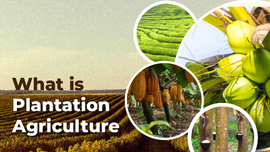
- Plantation Farming
- Mixed Farming
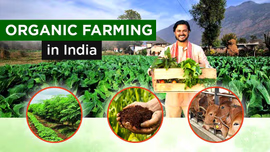
- Organic Farming
- Dryland Farming
- Terrace Farming
Understanding The Crop Seasons in India
India's diverse climate makes it one of the richest countries in the agricultural sector. To make the most of seasonal variations in temperature, daylight, and rainfall, Indian agriculture is divided into three crop seasons: kharif, rabi, and Zaid. Let's take a closer look at each crop season and the climate conditions in which they flourish.
Kharif: The kharif season starts with the monsoon (June or July) and ends around September and October. This season is the most important, as most crops depend on rainfall. Thus, farmers sow seeds at the beginning of the rainy season and harvest after the monsoon. Rice, cotton, Bajra, sugarcane, and maize are some examples of kharif crops.
Rabi: The rabi season in India starts after the monsoon (October–November) and is harvested in the spring (March-April). This cropping season is mainly dependent on irrigation and requires cooler temperatures for growth. Wheat, peas, and mustard are some major rabi crops.
Zaid season: This season is a short agricultural period between rabi and kharif. Zaid's season plays a vital role in producing high-value vegetables and fruits. Also, the crops in this season grow with warm temperatures and irrigation. Some common Zaid season crops include cucumbers, watermelon, bitter guard, and muskmelon.
Modern Technology Used in Agriculture in India
Agricultural production in India has increased by adopting new and improved technologies. New technologies have made the farming process easier and more efficient. Some of the famous technologies used in the agriculture sector in India are:
Soil Sensor: This technology is used to measure the soil moisture level and temperature that affect the growth of crops. All the data collected by the soil sensor is wirelessly transmitted to the farmer, who can easily adjust his farming practices.
GPS Technology: GPS technology helps to find out the field boundaries and manage resources like seeds, fertilizer, and water exactly where required. Also, this reduces waste and boosts efficiency.
Weather Monitoring: With this technology, farmers can access real-time weather data. This information decides when to sow, how to irrigate, and what kind of crop to grow. This detail can be obtained via weather websites, apps, or weather stations on the farm.
Agriculture Robots: Agriculture robots perform various tasks on farms, such as picking fruits, cutting grass, and milking cows. These robots work for a long period and often do better jobs than human workers.
Satellite Imagery: This technology is used for crop monitoring, weather forecasting, and yield analysis. Also, it helps farmers to make decisions regarding cropping patterns, irrigation, etc.
What is the Role of Technology in Agriculture?
Nowadays, Artificial Intelligence (AI) and IoT are being widely used in agriculture for various applications like crop disease detection, livestock health monitoring, automated weed control, and precision monitoring to enhance productivity. Overall, with the help of AI, farmers are:
- Monitoring the fields with satellites and drones
- Can identify the crop's health
- Getting real-time information about nutrients and soil testing
- Predicting diseases
- Using a smart system for irrigation
- Using water correctly
- Finding out what crop needs
Furthermore, using modern technology in agriculture like AI and IoT not only advises farmers but also prepares them in advance to prevent losses. AI technology helps farmers know which insects and diseases can harm the crops, what the upcoming weather will be like, and more.
How Tractors & Farm Implement Boost Farm Productivity?
Tractors revolutionize modern agriculture in India by saving time, reducing labour dependence, and increasing productivity. A single tractor can handle a wide range of tasks when paired with the right implements. Some widely used tractor implements in India are as follows:
- Plough for soil turning.
- Rotavators for soil preparation and creating fine seedbeds.
- Seed drills for precision planting.
- Cultivators for maintaining soil health and weed control.
- Sprayers for controlling weeds, pests and diseases , protecting crops, and boosting yields.
- Harvesters for cutting crops.
Top 5 Government Schemes for Indian Agriculture
Pradhan Mantri Kisan Samman Nidhi Yojana: This is a central scheme of the Indian Government that provides financial assistance to landholding farmer families to meet their agricultural and household expenses. Under this scheme, farmers get an amount of Rs. 6000 per year in three equal installments.
Pradhan Mantri Fasal Bima Yojana: This crop insurance scheme provides financial protection to farmers against crop damage from natural calamities, such as hailstorms.
Kisan Credit Card Scheme: The KCC scheme provides adequate credit to farmers for agricultural activities like buying inputs such as seeds and fertilizers. This scheme also provides flexible repayment terms and low interest rates. To apply for KCC, you just need to visit the bank's website where you want to apply.
PM Dhan-Dhaanya Krishi Yojana: This is a new scheme in the agriculture sector in India, which aims to improve irrigation, enhance productivity, promote crop diversification, and ensure credit access. This scheme comes with Rs. 24,000 crore budget to enhance agricultural production in India and farmer prosperity.
PM Kisan Maandhan Yojana: This is an Indian government-backed voluntary pension scheme. This scheme is specifically designed for small and marginal farmers, providing a minimum assured pension of Rs. 3,000 per month after 60. However, to apply for this scheme, you should be aged 18 to 40 and make monthly contributions.
Frequently Asked Questions On Agriculture In India: Types, Technology & Government Scheme
1. Why is India famous for agricultural activities?
India is famous for agricultural activities due to its favorable climate, diverse crops, fertile soils, and status as one of the largest producers of fruits, spices, and cereals.
2. Which crop is widely grown in India?
Rice is a widely grown in India, especially in states like Punjab, Uttar Pradesh, and Andhra Pradesh.
3. What is the importance of Indian agriculture?
Agriculture in India ensures food supply, drives allied industries, and supports rural livelihoods.
4. What are the advanced technologies of agriculture in India?
Drones, AI, IoT, robotics, and sensors are some of the top advanced technologies in India that are used in agriculture.
5. What is the future of agriculture in India?
The future of agriculture in India depends on the use of new technologies such as AI, IoT, and drones.




Related Blogs