Sesame Farming in India: A Comprehensive Guide


Sesame or gingelli is one of the oldest oilseed crops in India. It is also known as “Til” in many parts of India. Sesame seeds, their powder, or their oil are used in various Indian dishes as a flavouring agent. In India, the sesame crop can be cultivated as both a Kharif and a Rabi crop. Read this blog till the end, where we discuss all the steps involved in sesame cultivation.
Table of Contents
- An Overview of Sesame Farming
- What are the Different Types of Sesame Seeds?
- What are the Benefits of Sesame or Gingelly Seeds?
- Ideal Practices for Sesame Cultivation in India
- Which are the Major Sesame Producing States in India?
An Overview of Sesame Farming
Sesame, also known as Sesamum Indicum, is a flowering plant from the genus Sesamum. It is known for its white or pale pink flowers and dark green coloured leaves. Sesame seeds contain around 50% oil, 25% protein, and 15% carbohydrates, and are a prevalent ingredient in many cuisines worldwide.
In India, sesame farming can be done in almost every season, as it is a low-maintenance crop that requires minimal support. It can be grown in drought conditions, in high heat, with residual soil moisture after monsoons are gone, or even when rains fail or are excessive.
India is among the largest oilseed product exporters when it comes to sesame seeds. Sesame is grown in almost all parts of India, but West Bengal, Rajasthan, Maharashtra, Gujarat, and Uttar Pradesh are the major sesame-growing states. It grows in various seasons, including Kharif, Rabi, and Zaid. “Til ke Laddoo” is a popular Indian sweet which is consumed during festivals.
What are the Different Types of Sesame Seeds?
White sesame seeds, black sesame seeds and yellow sesame seeds are the three types of seeds classified according to the difference in the colour of their germplasm. Among these three, black and white sesame seeds are the most popular in India. Have a look at the image below to know the major difference between the two:
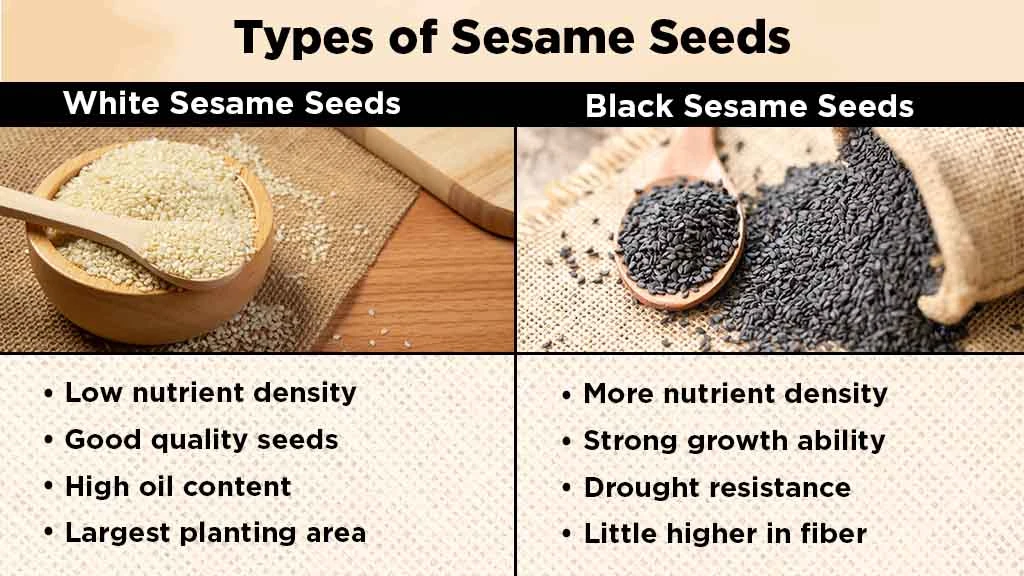
|
Types of Sesame Seeds |
|
|
White Sesame Seeds |
Black Sesame Seeds |
|
Image
|
Image
|
What are the Benefits of Sesame or Gingelly Seeds?
- Sesame seeds are rich in fibre that helps with quick digestion and improves gut health.
- These seeds have high levels of calcium and magnesium, which help develop strong bones.
- Sesame seeds contain two standout compounds, sesamin and sesamol, that are known for their strong antioxidant effects.
- It also balances cholesterol and supports heart health.
Ideal Practices for Sesame Cultivation in India
Soil & climate, land preparation, sowing method, etc., are some of the important steps involved in the cultivation of sesame. Let’s understand all in more detail.
Soil & Climate Requirements
Sesame requires well-drained soil with a pH between 5.5 and 8. The ideal temperature to grow sesame is between 25 °C and 35 °C. Alkaline or acidic soils are not recommended. It is a tropical crop that requires rainfall of 450–500 mm. Sesame can grow at an altitude of up to 1600 m MSL.
Land Preparation
Clearing the field is an important step before you start the cultivation process. Plough the field twice with a cultivator or thrice with an MB plough. Break the clods with a rotavator to obtain the fine tilth.
Seed Selection and Treatment
Always choose high-quality seeds for better yield. Ensure you choose the right variety of sesame seeds for your climate and soil conditions. Treat the seeds with Carbendazim at 2g/kg.
Growing Seasons
It can be cultivated in both Kharif and Rabi seasons. For the Kharif season, the suitable sowing period is from June to July, for the Rabi season, the best sowing time is October to November.
Sowing Method
The recommended seed rate of sesame cultivation is 5 kg/hectare. Sow the seed in lines and mix seeds with sand @ 1:4 ratio and drop in furrows at 3 cm depth at 30 X 30 cm spacing.
Fertilizer Management
The application of fertilizers should be done based on soil testing. Before the last ploughing, spread FYM, composted coir pith, or compost at 12.5 t/ha, then plough and incorporate it.
Irrigation
The soil should be consistently moist, but it should not be waterlogged. Irrigate immediately after sowing, followed by irrigation at 5-7 days after sowing.
Crop Protection
|
Pest or Disease |
Symptoms |
Management |
|
Leaf webber/ roller and capsule borer |
Webbing of terminal leaves and bore the tender shoots at the vegetative phase.
|
Two sprays of Neem oil 2% or NSKE 5 % at 15-day intervals. |
|
Leaf hopper |
Curling of leaf edges and leaves turns red or brown.
|
Spray Quinalphos 25 EC @ 800 ml/ac or thiamethoxam 25WG @ 40 g/ac or imidacloprid 17.8 SL @ 40 ml/ac. |
|
Aphids |
Crinkling and curling of leaves.
|
Seed treatment with imidacloprid 600FS @ 7.5 ml per kg seed. |
|
Alternaria leaf blight |
Small, circular reddish-brown spots with concentric rings on leaves.
|
Spray mancozeb at 1000 g/ha. |
|
Root rot / Stem rot/Charcoal rot |
Dark brown lesions at the collar region or the yellowing and defoliation of leaves. Shredding of bark.
|
Seed treatment with Trichoderma viride@ 4 g/kg or soil application of T. viride@ 2.5 kg/ ha with 500 kg FYM @ 30 days after sowing. |
Harvesting & Threshing
Usually, sesame seeds are ready to harvest within 3 to 5 months, but the most suitable time to harvest is when the leaves start turning yellow and drooping, while the bottom capsules are lemon yellow. Harvest before the bottom capsules turn brown. Usually, the sesame seeds are threshed by gently beating well-dried plants with sticks.
Which are the Major Sesame Producing States in India?
The top sesame seed-producing states in India are West Bengal, Madhya Pradesh and Gujarat. Below is the complete list with total production in FY 2022-23:
|
Major States |
Production (lakh tonnes) |
|
West Bengal |
2.51 |
|
Madhya Pradesh |
1.46 |
|
Gujarat |
1.44 |
|
Uttar Pradesh |
0.84 |
|
Rajasthan |
0.79 |
|
Tamil Nadu |
0.25 |
|
Karnataka |
0.13 |
|
Telangana |
0.11 |
|
Assam |
0.10 |
|
Andhra Pradesh |
0.08 |
Sesame is an important crop for Indian farmers due to its nutritional value and high-value oil. Its use spans across industries, ranging from food and pharmaceuticals to cosmetics. In addition, sesame is a low-input crop, which makes its cultivation easier. To ensure a successful sesame harvest, make sure to follow the ideal practices discussed in this article.
Frequently Asked Questions On Sesame Farming in India: A Comprehensive Guide
1. Is growing sesame profitable?
Yes, growing sesame can be profitable in India, as it is a low-maintenance, high-demand crop that can be a good source of income for a wide range of farmers.
2. How long does it take for sesame to grow?
Sesame can be grown within 90 to 150 days, depending on the specific variety and climatic conditions.
3. Who is the largest producer of sesame in India?
West Bengal is the largest producer of sesame in India.
4. What are the challenges of sesame production?
Pest & disease pressure, low-yielding varieties, drought conditions, etc., are some of the major challenges of sesame production in India.
5. Which climate is best for sesame?
Sesame grows best in warmer climates with temperatures between 25 °C - 35 °C and rainfall between 450 and 500 mm.




Related Blogs