What is Cage Culture in Aquaculture: Concepts, Benefits & Its Growing Importance in India


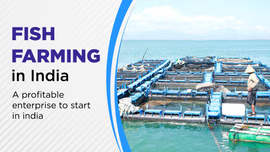
Cage culture is the practice of rearing fish in cages submerged in natural water bodies. It involves using cages or nets suspended at various depths in water bodies. Read on to learn more about the importance of cage culture in India and how to start a successful cage-culture fish farming business.
Table Of Contents
- Overview of Aquaculture & Cage Culture
- What is Cage Culture?
- What is the Importance of Cage Culture in India?
- What are the Benefits of Cage Culture in India?
- What are the Contributing Factors behind Cage Culture in India?
- How to Start Cage Culture Fish Farming in India?
- Site Selection
- Selection of Fish Species
- Types of Cages & Cage Size used in Cage Culture
- Stocking of the Yield
- Cage Management
- Harvesting in Cage Culture
- Final Thoughts
Overview of Aquaculture & Cage Culture
Aquaculture means farming of aquatic organisms. It plays an important role in meeting the world’s rising demand for fish. Fishing is a key part of India’s economy, making up 1.07 percent of its total GDP. India ranks third in global fish production, accounting for 7.96 percent of the world’s total fish production. It is the second-largest producer of fish through aquaculture. In 2020-21, India produced about 14.73 million metric tonnes of fish. The country uses several aquaculture methods.
Cage culture is a method where fish are raised in cages placed in natural water bodies. This approach is becoming more popular in India as it helps in increasing seafood production.
What is Cage Culture?
Cage culture involves the use of cages or nets suspended at various depths in natural water bodies. These cages are typically made of floating materials, such as plastic or metal frames, so that they can float on the water's surface. The fish raised in the cage are fed a balanced diet. Their growth is monitored and facilitated under controlled conditions.
Cage culture fish farming is better than traditional open-water practices for several reasons. Unlike pond-based aquaculture, cage culture affects the natural environment's water flow and quality.
What is the Importance of Cage Culture in India?
Cage culture is gaining a foothold in India and is now used to rear and breed fish on a larger scale. The Department of Animal Husbandry has recognized its importance in increasing fish production. It launched Mission Cage Culture 2022 to achieve the production of an additional 75,000 metric tonnes of fish. This is one of many government schemes to promote fish farming in India.
What are the Benefits of Cage Culture in India?
Cage Culture Fish Farming has many benefits, which are listed below:
- Cage culture increases fish production from reservoirs and lakes in a responsible, livelihood-friendly way.
- It also increases the availability of fish protein for the entire population.
- Fishers see improved income security from inland fisheries resources.
- It supports sustainable, inclusive aquaculture growth alongside natural resource conservation.
- Cage culture enables aquaculture without harming the interests of other stakeholders of land and water resources.
What are the Contributing Factors behind Cage Culture in India?
The numerous factors causing cage culture in India are:
- Rising fish consumption and the depletion of wild fish stocks have heightened interest in fish production via cage culture.
- Small-scale farmers are seeking alternatives to conventional agricultural practices.
- Cage culture enables increased fish production, thereby playing a significant role in enhancing the country's overall fish output.
How to Start Cage Culture Fish Farming in India?
Cage culture is practiced in areas where there is sufficient water movement. The major steps involved in starting cage culture fish farming are:
Site Selection
The first step in cage culture fish farming is choosing the right site. Look at factors such as pollution, oxygen levels, salinity, water flow, and algae blooms to ensure the habitat suits your fish. Also, consider the weather, available shelter, and the depth of the water.
Some additional factors also need to be considered when deciding on a site for cage culture, such as access, social and economic safety, closeness to fishing harbours, market considerations, and many more. At least 5 metres of water column depth is recommended, and there must not be any industrial or local contamination in the water supply. It should be clear and flow freely.
Choose a spot in a bay within a medium or large reservoir to shield the cages from strong winds. Make sure the cages are anchored deep enough, since irrigation channels and sluice gates can cause issues.
Marine and land transportation access is important. You need to ensure that no algae blooms are present to prevent fouling. Aquatic macrophytes and large concentrations of wild fish depleting the oxygen content in the water should be neglected. Cages should not be placed in ways to avoid obstruction of traffic, and ghats where people take a bath should not be considered.
Selection of Fish Species
The selection of fish species should be made by considering many biological factors, such as hardiness, disease resistance, high-quality seed availability, rapid growth, and effective food conversion. The highly suitable fish species for sea cage farming are Cobia (Rachycentron canadum), Spiny Lobster (Panulirus sp.), Groupers (Epinephelus sp.), Snappers (Lutjanus sp.), Seabass (Lates calcarifer), and Silver Pompano (Trachinotus blochii).
Types of Cages & Cage Size used in Cage Culture
There are three types of cages used in aquaculture: fixed cages, float cages, and submerged cages. A fixed cage is the most basic type of cage and is widely used in cage culture.
As per the guidelines of the Central Marine Fisheries Research Institute (CMFRI), a circular cage of 6 m in diameter and 4 m in depth or a rectangular cage of 6 X 4 X 4 m can be used. The cage should be encircled by a bigger outer net with a gap of one meter around it. Moreover, a bird net is also overlaid on the cage frame.
Stocking of the Yield
Stocking density impacts production and growth. The stocking and estimated harvest quantities of different fish species are listed below:
|
Species |
Stocking Size (Length/Weight) |
Stocking Density (Nos./cu. m) |
Production per Cage (in kg) |
|
Grouper |
15 cm/ 40 g |
15-20 |
2000 kg/ 7 months |
|
Seabass |
10 cm/ 30 g |
30-40 |
2000 kg/ 8 months |
|
Pompano |
10 cm/ 35 g |
30-40 |
1800 kg/ 8 months |
|
Cobia |
15 cm/ 35 g |
8-10 |
2400 kg/ 7 months |
Cage Management
Cage management aims to produce as many fish as possible while keeping costs low. Good management relies on the operator’s skills, proper feeding, checking environmental conditions, controlling disease and predators, choosing the right stocking density, and handling other technical details.
The whole cage, including the mooring and frame, needs regular inspection, and any repairs or maintenance needed should be done immediately. Bio-fouling can clog the net mesh, slowing water flow. This causes low oxygen and waste buildup, which can stress or kill fish. So, it’s important to brush the net mesh often.
Harvesting in Cage Culture
When harvesting from a cage culture, consider market demand to get the best price. You can harvest part of the stock to avoid oversupplying the market and lowering prices. In this case, start by harvesting larger fish first. Keep accurate harvest records on-site. A good post-harvest and marketing plan is the key to success in sea cage farming.
Cage culture centers should have facilities like fishing boats and equipment, icing, holding and storage of the stock, means to transport live fish, and links to processing centers and market networks.
Final Thoughts
Cage culture in aquaculture is a risky job that requires caution. Proper safety precautions are essential when practising cage culture fish farming. Mandatory lifesaving equipment at the cage site includes communication devices, jackets, and first aid kits. People working in the sea cage must wear a lifejacket at all times. Cage aquaculture can significantly contribute to India's aquaculture sector, as commercial-quality fish production depends on it.
Frequently Asked Questions On What is Cage Culture in Aquaculture: Concepts, Benefits & Its Growing Importance in India
1. What is Cage Culture?
Cage culture is the practice of rearing fish in cages submerged in natural water bodies. It involves using cages or nets suspended at various depths in water bodies.
2. What is the size of a culture cage?
A circular cage of 6 m in diameter and 4 m in depth or a rectangular cage of 6 X 4 X 4 m can be used.
3. What are the advantages of cage culture?
Cage culture can use many types of water resources including lakes, reservoirs, ponds, etc. A relatively low initial investment is required in an existing body of water.
4. What is another name for fish farming?
Fish farming is called aquaculture. It means farming of aquatic organisms.




Related Blogs